A power surge, or transient voltage, is an increase in voltage significantly above the designated level in a flow of electricity. In normal household and office wiring in the United States, the standard voltage is 120 volts. If the voltage rises above 120 volts, a problem exists, and a surge protector helps to prevent that problem from destroying your computer. Even if increased voltage doesn't immediately break your machine, it may put extra strain on the components, wearing them down over time.
- IEEE (The Institute of Electrical and Electronic Engineers) states that 6000V is the largest transient that the interior of a building would experience.
- IEEE defines its harshest interior surge environment as one that could experience 100 surges of 6000V, 3000A in a years time (category B3).
- A new federal guideline recommends that a surge protector utilized in a harsh environment should be capable of withstanding 1000 surges of 6000V, 3000A or ten years worth of IEEE’s category B3.
-
 UL (Underwriters Laboratories) now provides a new adjunct testing service (in addition to the 1449 safety classification) that will test surge protectors to the 1000 surge, 6000V, 3000A federal protocol.
A standard surge protector passes the electrical current along from the outlet to a number of electrical and electronic devices plugged into the power strip. If the voltage from the outlet surges or spikes -- rises above the accepted level -- the surge protector diverts the extra electricity into the outlet's grounding wire.
Usually a varistor, also known as an MOV, connects the power line to the ground. When the voltage spikes, these varistors allow the current to run to the ground and dissipate the surge. When current returns to normal, the varistors have higher resistance that prevent normal current from traveling to the ground. Another method uses a gas tube in a similar parallel circuit to perform the same job as the varistor.
Some surge products use a series circuit design instead. Basically, these suppressors detect the higher voltage, store the extra energy in a series of capacitors, and release it gradually to the neutral line when the current returns to its normal state. The idea is to prevent the electricity from traveling to the ground line and possibly disrupting the building's electrical system.
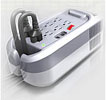 Newer surge suppression equipment similar to the series circuit design is being designed to also protect the ground wire from bi-directional transient current. Circuits are added to make transient current unidirectional, passing any surplus energy back down the neutral wire and into the transformer or back to the distribution panel where it is dissipated. This is similar to a one-way valve in a water pipe that prevents water from flowing backwards in a pipe.
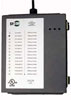 Many surge suppressors combine technologies, and better surge suppressors arrange them in multiple stages to prolong life and improve response time. They utilize a lattice of MOVs, avalanche diodes, reactive circuits, and capacitors that eliminate line noise.
Surge suppressors can’t be completely relied upon during lightning storms because of the tremendous surge in current. The safest solution would be to unplug the device. Lightning is not the most common cause for surges, though. Surprisingly, high-power electrical devices, such as elevators, air conditioners and refrigerators are usually the culprit for surges because of the demand placed on the system turning on and off components like compressors and motors in these appliances.
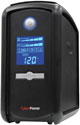 An ordinary UPS WILL give you a high level of protection, but you should still use a surge protector. A UPS will stop most surges from reaching your computer, but it will probably suffer severe damage itself. It's a good idea to use a basic surge protector, if just to save your UPS.
Be sure that the product is listed as a transient voltage surge suppressor. This means that it meets the criteria for UL 1449, UL's minimum performance standard for surge suppressors. A lower clamping voltage indicates better protection. There are three levels of protection in the UL rating -- 330 V, 400 V and 500 V. Generally, a clamping voltage more than 400 V is too high. A higher number for energy absorption indicates greater protection. Look for a protector that is at least rated at 200 to 400 joules. For better protection, look for a rating of 600 joules or more. Also, make sure the surge suppressor has a response time of less than 1 nanosecond.
Sources:
http://computer.howstuffworks.com/surge-protector.htm
http://en.wikipedia.org/wiki/Surge_protector
http://www.extremetech.com/article2/0,1697,1155241,00.asp
http://www.sycomsurge.com/
http://www.ditekcorp.com/



 0 Item


